Contact Us

1-Although the pandemic has eased, mask safety remains worth attention
As the pandemic situation has eased, masks have not disappeared from people’s daily lives. Instead, they have gradually become an important part of daily health protection. Whether commuting on public transportation, visiting healthcare facilities, or when air quality is poor, many people continue to wear masks to help reduce exposure to viruses, bacteria, and airborne pollutants that may affect their health.
Because masks come into direct contact with the nose, mouth, and skin, the safety of mask materials has attracted increasing attention in recent years. This concern has been further highlighted by media reports regarding heavy metals detected in certain colored masks, as well as discussions surrounding formaldehyde and other substances of concern.
In fact, these concerns have largely stemmed from previous inspections of commercially available masks. Taiwan’s Consumers’ Foundation (TCF) conducted inspections on 20 types of masks available on the market. The results indicated that three tested products contained lead levels ranging from 6 to 11 mg/kg in their outer layers, while volatile organic compounds were detected in several of the tested products. These findings have increased public awareness and encouraged further discussion regarding the importance of mask material safety.
As a result, many consumers have begun to question whether long-term mask use could potentially lead to exposure to heavy metals or other potentially unwanted substances.
However, most medical masks manufactured by reputable companies that comply with applicable regulations and quality standards undergo strict quality control procedures. Consumers should focus on selecting masks from reliable sources and manufacturers while avoiding products with unclear origins or without proper testing documentation, as these products may present greater uncertainty regarding material safety.
Rather than becoming overly concerned about isolated incidents, consumers can make more informed decisions by understanding how to identify safe and compliant masks. Choosing products from trustworthy manufacturers with established quality management systems and reliable testing procedures can help minimize potential risks and provide greater confidence in daily mask use.
2-Where Could Heavy Metals in Masks Come From?
Dyes, Additives, and Raw Material Quality May Affect Potential Risks
A medical mask is typically composed of multiple layers of nonwoven materials. If quality control is insufficient during manufacturing or if unsuitable raw materials are used, there may be a possibility of unwanted substances remaining in the final product.
Common potential sources include:
1-Dyes or color masterbatches used in colored masks
2-Processing additives used during nonwoven fabric production
3-Contamination of raw materials during manufacturing or storage
4-Improper production equipment management or manufacturing processes
As a result, consumers have increasingly focused on the potential heavy metal risks associated with colored masks. However, color itself is not the determining factor of safety. The key considerations are whether the dyes or pigments used comply with safety requirements and whether the finished products undergo proper testing. Many consumers wonder whether colored masks are more likely to contain heavy metals or carcinogenic substances. In reality, product safety cannot be determined simply by appearance or color. The factors that truly affect mask safety include:
1-Whether high-quality medical-grade raw materials are used
2-Whether pigments and colorants comply with relevant safety requirements
3-Whether azo dyes that may release carcinogenic aromatic amines are avoided
4-Whether products undergo third-party testing
What Health Risks Can Heavy Metals Cause?
Common heavy metals include lead, cadmium, and chromium. Long-term exposure to high levels of certain heavy metals may increase health risks, including:
1-Effects on the nervous system and developmental functions
2-Increased burden on liver and kidney metabolism
3-Potential impacts on reproductive health
4-Carcinogenic risks associated with certain heavy metals
In addition, certain processing agents, such as formaldehyde and specific azo dyes, may potentially cause skin irritation or allergic reactions.
However, it is important to note that health impacts depend on factors such as actual exposure levels and duration of exposure. Medical masks legally manufactured and marketed must comply with applicable regulatory requirements. For most consumers, choosing masks from reliable sources and manufacturers that follow quality standards can help minimize concerns regarding heavy metals or other substances of concern.
3-Understanding Mask Testing Results
When consumers see news reports mentioning terms such as “lead detected” or “heavy metals detected,” it is understandable that they may become concerned about whether masks are toxic or unsafe.
However, when evaluating mask safety testing results, several key factors should be considered:
1-Whether the testing was conducted by an independent third-party laboratory
2-Whether the testing covers relevant items such as heavy metals, formaldehyde, and azo dyes
3-Whether the test results comply with applicable regulatory standards
4-Whether a complete test report is provided rather than only selected information
The safety of a product should not be determined solely by whether a specific substance is detected. Instead, evaluation should consider the testing methods, whether the results comply with applicable safety standards, and the potential risk based on actual exposure conditions.
4-How to Identify Safe and Reliable Masks
To reduce the risk of exposure to masks containing unwanted substances, consumers can consider the following factors when selecting masks:
1-Choose products that are legally registered and approved as medical devices
2-Prioritize reputable brands or manufacturers with comprehensive quality management systems
3-Check whether third-party testing reports are available
4-Confirm whether complete manufacturer and product information is provided
5-Avoid products from unknown sources or those offered at unusually low prices
Selecting masks from reliable manufacturers with transparent quality control processes can help consumers make safer and more informed choices.
5-How to Reduce Risks from the Source of Materials
The safety of a mask is determined not only by its appearance, but by the quality of raw materials, manufacturing processes, and overall quality management system. To reduce potential risks from the source, manufacturers should focus on the following key areas:
1-Use polypropylene (PP) nonwoven materials that meet applicable quality requirements
2-Select raw material suppliers with comprehensive quality management systems
3-Ensure that the sources of raw materials, dyes, and additives are transparent and traceable
4-Establish complete raw material batch tracking and production management sys
5-Conduct product inspections and quality verification according to established quality control procedures
Mask safety does not rely on a single test result alone. Instead, it is built through a comprehensive quality management system covering raw material selection, manufacturing processes, quality control, and product testing.
By implementing strict quality control procedures throughout the entire production process, manufacturers can continuously reduce potential risks and provide consumers with safer and more reliable products.
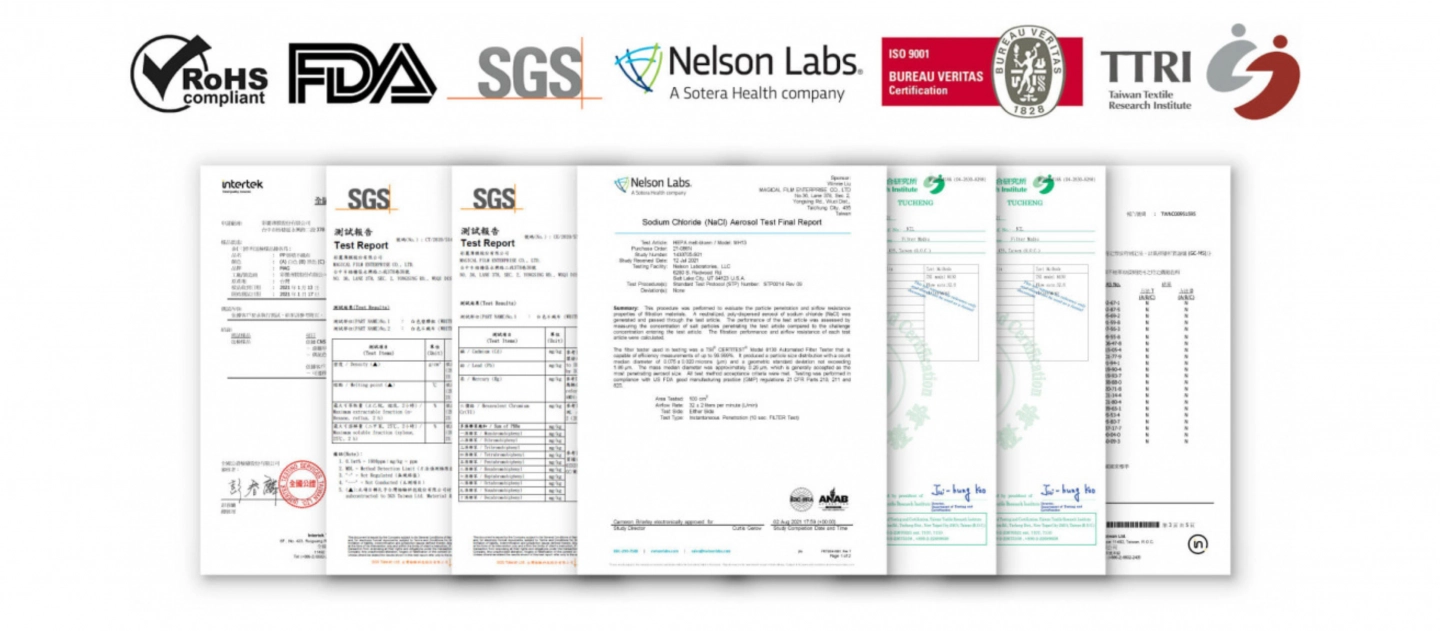
Since our establishment, we have been committed to the values of safety, quality, and integrity, providing reliable nonwoven material solutions. Our nonwoven and meltblown fabrics can be used for the inner, middle, and outer layers of masks. From material selection to production and quality control, every step is carefully managed. Our products are tested for heavy metals and other substances of concern to ensure compliance with applicable quality and safety requirements.
For reliable nonwoven and meltblown material solutions, please contact us for further cooperation opportunities.