 Contact Us

CONTENS
1-How do masks protect us? Understanding mask principles and protection mechanisms2-What is a mask made of? Understanding mask structure and materials
3-Meltblown fabric and nose wire: key materials that determine protection and comfort
4-Are mask materials safe? Understanding colored masks and heavy metal concerns
5-What is the difference between BFE and PFE? Key indicators of mask filtration performance
6-What affects mask comfort?
7-How to choose a safe mask? Understanding types and materials
8-Understanding masks starts with understanding materials

Masks have become an essential protective item in modern life. Whether during flu seasons, days with poor air quality, or in medical and industrial environments, masks play an important role in reducing risk.
However, have you ever wondered what a seemingly simple mask is actually made of? How do masks block viruses? And what are the differences between various types of masks?
In reality, the protective performance of a mask does not depend solely on its appearance or thickness, but on the combination of its structure, materials, and protective mechanisms. From the filtration capability of meltblown fabric to the sealing design of the nose wire, every component affects both protection and wearing comfort.
This article will guide you through mask principles, structure, materials, comfort considerations, and types, helping you build a complete understanding of masks.
1-How do masks protect us? Understanding mask principles and protection mechanisms
Many people believe that viruses are extremely small, and therefore face masks cannot effectively block them.
However, in reality, most viruses do not exist as single particles suspended in the air. Instead, they are typically carried on respiratory droplets or aerosol particles during transmission.
Therefore, the primary function of a face mask is not to directly block individual viruses, but to filter out these virus-laden droplets and fine particles, thereby reducing the risk of inhaling pathogens into the human respiratory system.
How do masks block viruses?
When we breathe, droplets, dust, pollen, and airborne particles may enter the respiratory tract. Masks use multiple layers of materials and filtration structures to trap particles of different sizes within fiber layers, forming the first line of defense.
What are the filtration principles of masks?
Mask filtration mainly works through two mechanisms:
Mechanical filtration
Uses the fibrous mesh structure to physically block larger droplets, dust, and pollen particles.
Electrostatic adsorption
Uses static electricity on fibers to attract and capture fine particles, improving filtration efficiency while maintaining breathability.
Mask protection mechanism and the importance of meltblown fabric
In surgical masks, KF94 masks, and N95 masks, the core material responsible for filtration is meltblown fabric.
Meltblown fabric features ultra-fine fibers and can be charged through electret technology, enabling electrostatic particle capture. This makes it the key factor in mask filtration efficiency.
In addition, the basis weight and fiber design of meltblown fabric also affect filtration performance and breathability.
2-What is a mask made of? Understanding mask structure and materials
Many people wear masks daily without knowing their actual components.
A typical surgical mask consists of five main parts:
Outer water-repellent layer
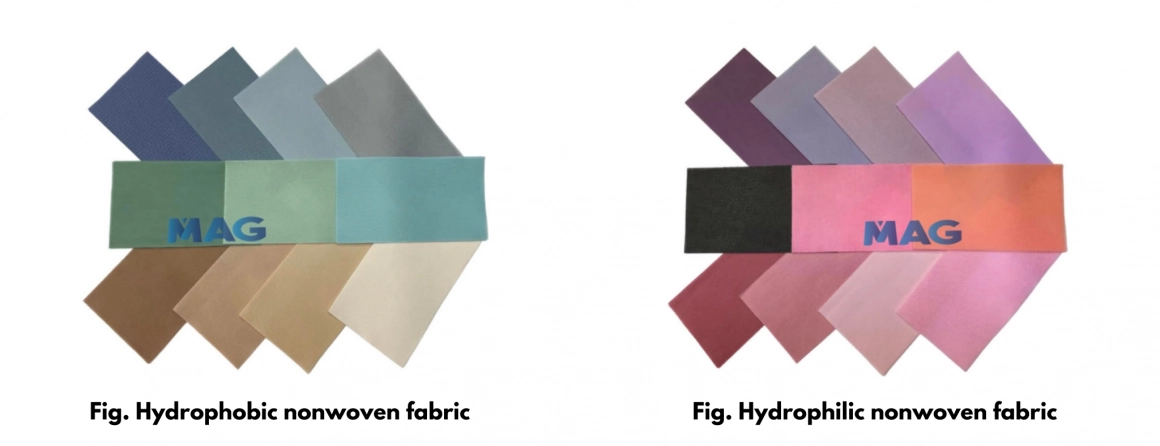
Usually made of spunbond nonwoven fabric, designed to block droplets, moisture, and liquid penetration.
Middle filtration layer
Mainly meltblown fabric, responsible for the mask’s core filtration function.
Inner skin-friendly layer
Made of soft nonwoven materials, designed to absorb moisture from breathing and improve comfort during long-term wear.
Nose wire
Nose wire helps the mask conform to the shape of the nose bridge, reducing air leakage.
Ear loops
Secure the mask in place and affect wearing comfort over time.
Although a mask may look simple, each layer serves a distinct function and together forms a complete protective system.
3- Meltblown fabric and nose wire: key materials that determine protection and comfort
Among all mask components, meltblown fabric and nose wire have the most direct impact on both protection and user experience.
Meltblown fabric determines filtration efficiency
The quality of meltblown fabric directly affects:
- BFE (Bacterial Filtration Efficiency)
- PFE (Particle Filtration Efficiency)
- VFE (Viral Filtration Efficiency)
- Overall protection performance
Fiber fineness, GSM, electret technology, and manufacturing stability all influence final filtration performance.
Nose wire determines mask fit
Even if a mask has high filtration efficiency, air can still leak through gaps if it does not fit the face properly.Therefore, the nose wire affects:
- Fit
- Leakage risk
- Wearing comfort
- Long-term usability
In recent years, all-plastic nose wires have gained popularity due to their safety, elasticity, and durability.
4-Are mask materials safe? Understanding colored masks and heavy metal concerns
In addition to filtration and comfort, consumers are increasingly concerned about material safety.
With the popularity of colored masks, issues such as pigments, heavy metal residues, and additives have gained attention.
Where do colored masks get their color?
Colored masks are typically produced using Color Masterbatch or printing process.
Different manufacturing methods may involve different raw materials and additives, making verified and certified materials important.
Is there a risk of heavy metals in masks?
Some reports have mentioned heavy metal detection in certain products, raising public concern.
In reality, such risks are usually related to raw materi Is there a risk of heavy metal exposure from wearing masks daily? al sources, pigment quality, and manufacturing control. Therefore, third-party testing and material traceability are essential.
How to determine if mask materials are safe?
It is recommended to check:
- Whether third-party test reports are available
- Whether the product complies with regulations
- Whether material sourcing is transparent and traceable
- Whether a complete quality management system is in place
5-What is the difference between BFE and PFE? Key indicators of mask filtration performance
When choosing masks, you often see two indicators: BFE and PFE.
Although both represent filtration efficiency, they measure different targets
| Item | BFE | PFE |
| Full name | Bacterial Filtration Efficiency | Particle Filtration Efficiency |
| Test subject | Bacterial droplets | Fine particles |
| Particle size | ~3 μm | 0.1~0.3 μm |
| Focus | Medical protection | Particle filtration capability |
What is BFE?
BFE (Bacterial Filtration Efficiency) measures a mask’s ability to block bacterial droplets and is an important indicator for medical masks.
What is PFE?
PFE (Particle Filtration Efficiency) primarily evaluates a mask’s ability to filter fine particles. Particles with a size range of 0.1–0.3 μm are considered the most penetrating particle size (MPPS), as they fall between the effective particle size ranges dominated by inertial impaction and Brownian motion. Therefore, testing at this particle size range provides a more accurate reflection of the filtration performance of the filter material itself.
How to interpret BFE and PFE?
Higher values generally indicate better filtration performance. However, real-world protection also depends on fit, breathability, and material quality.
Key factors affecting BFE and PFE include meltblown quality, basis weight design, and electret technology.
6-What affects mask comfort?
Protection is important, but if a mask is too hot, tight, or leaky, it may reduce long-term usage.
Nose wire material
Good nose wires maintain shape and reduce pressure and leakage.
GSM in nonwoven fabrics
Too heavy reduces breathability; too light affects structure stability.
Mask design
Flat masks, 3D masks, and fish-shaped 3D face masks suit different situations and face shapes.
Material breathability
High-quality meltblown fabric must balance filtration and breathing resistance.
7-How to choose a safe mask? Understanding types and materials
Masks on the market come in many types, and selection should depend on actual needs.
Daily commuting
Standard surgical masks are sufficient for most daily protection.
Long-term wear
Choose masks with better breathability and comfortable nose wire design.
High-risk environments
Consider high-protection masks such as N95.
Need for high fit
fish-shaped 3D face masks generally provide better facial sealing.
How to evaluate mask safety?
- Compliance with relevant standards
- Third-party test reports
- Transparency of material sourcing
- Stable quality meltblown fabric and nose wire usage
8-Understanding masks starts with understanding materials
Whether surgical masks, fish-shaped 3D face masks, or N95 masks, their protective performance ultimately comes from the combination of materials and structure.
Meltblown fabric determines filtration efficiency, nose wire affects fit, and nonwoven design influences breathability and comfort.
Therefore, choosing a mask should not rely only on appearance or price, but also on materials, testing standards, and manufacturing quality.
In the mask industry, true protection starts with materials. From meltblown fiber technology to all-plastic nose wire design, every detail determines final protection and user experience.
Choosing a mask is not just about appearance or color—it is about material safety and real protection. Understanding mask structure and testing standards helps you find truly reliable products.
MAG focuses on mask material R&D and manufacturing in Taiwan, providing complete material solutions from nonwoven fabric to meltblown fabric. All products pass relevant safety tests and are free from heavy metals and harmful substances, balancing protection and safety.
Learn more about MAG mask materials and testing information to make better choices for daily protection.
